
The world is ever evolving, and our city skylines continue to spread up and out with high-rise buildings, hospitals, schools, stadiums, bridges, and whatever else serves our every need. This wouldn’t be possible without tower cranes. So how exactly do tower cranes get build? Let’s find out.
Tower cranes generally get erected by the following stages.
- Planning
- Base design and build
- Crane erection
- Testing and signing off
Planning
Before any cranes get erected, lots of factors have to be taken into account, which requires rigorous planning.
Location
Cranes need to be positioned where they can reach everything. So, site plans get studied to determine where the core lifts will be taken from and to.
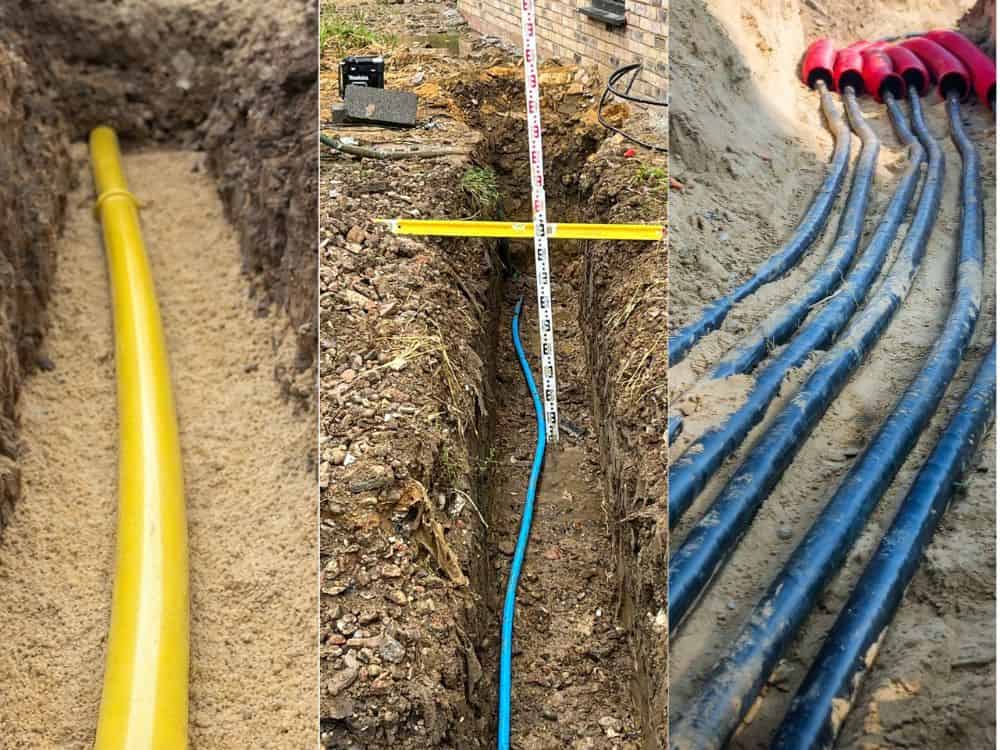
Site services also get studied on these plans, to ensure cranes aren’t positioned to impede things like sewerage and utility supplies.

Size
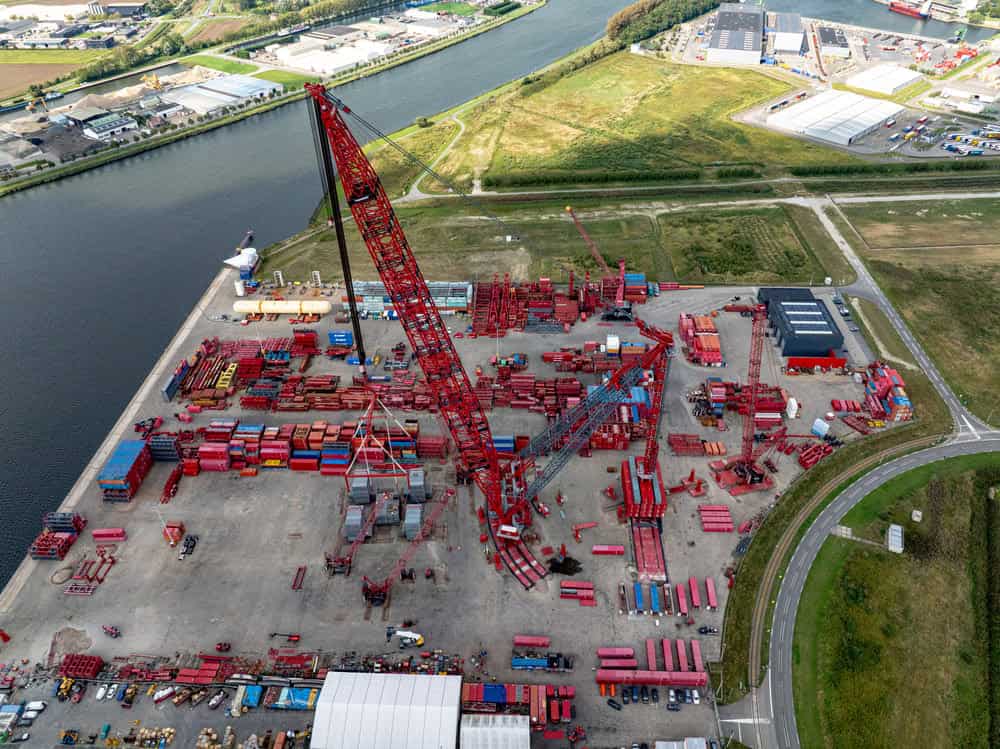
The crane should have the capacity to lift the heaviest item that’s to be lifted, within a cost-effective parameter. For example, throughout the project there could possibly be items that weigh no more than 10t, but with one 25t load to be lifted. Sometimes, it is more cost effective to use a smaller crane for the everyday lifting and hire a larger capacity mobile crane to do that one big lift, than to use a larger tower crane throughout the whole project.
Height is also crucial. A tower crane should be taller than the building it’s creating. Some contractors will keep the tower crane fairly low while the building is at the early stages, then climb the crane up as the building gets taller. Plus, when tower cranes get to a certain height, they get tied into the building using tie bars. The cut-off from going to freestanding to tied-in depends on the crane manufacturer’s guidelines.
The height can also impact flight paths. If a crane within 6km of airfields or aerodromes and to be erected 10m Above Ground Level (AGL) or surrounding trees or structures, if higher, the Civil Aviation Authority (CAA) must be notified. Similarly, the CAA must also be notified if a crane is to be taller than 100m AGL, regardless of the aforementioned surroundings.
Network Rail must also be notified if a crane is to be close to a rail line. If this is the case, the crane should be derated to prevent overloading, which could potentially tip the crane.
Then there’s jib length. As previously stated, the crane reach must correlate with the location of the lifts. So, if one crane can’t feasibly reach everything, then other cranes have to be factored in.
Workload
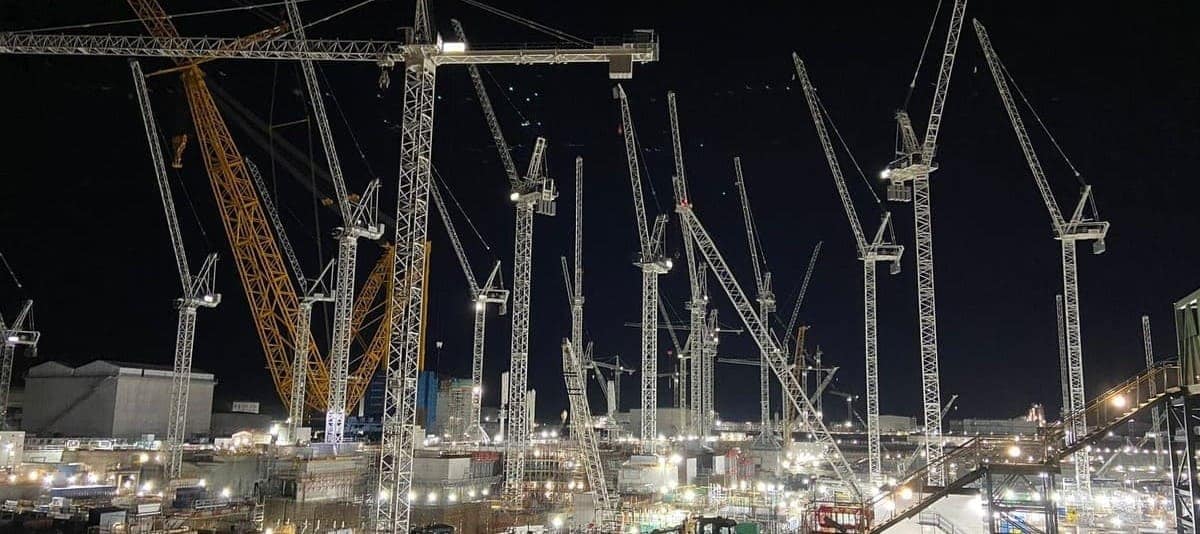
Even if one tower crane with a long enough jib can reach the whole site, it might not be enough to cope with the amount of work. Deadlines are usually in place and construction can sometimes get hectic. Again, this is where other cranes might have to be factored in.
As you can see, all these factors require lots of planning based on predetermined data from plans and schedules, with costs also brought into account.
Base building
The base is the crane’s foundation, making it a crucial ingredient for preventing the crane from tipping over.
The designing of tower crane bases takes a lot of planning in itself. There are different types of crane bases used for different reasons, so an engineer will design the base to suit factors like crane size, local wind speeds, and ground conditions or existing structure that base will stand on.
The different types of crane bases are:
- Gravity bases
- Piled-foundation bases
- Ballasted cruciform bases
- Grillages
You can learn much more about each type of crane base here.
Crane erection phase
Now we’re at the nitty gritty phase. Actually getting the crane up. It’s important to note that erection procedures and the order of these procedures differ, depending on the crane manufacturer’s guidelines and the company carrying out the work. But the basic crane erection procedures are as follows.
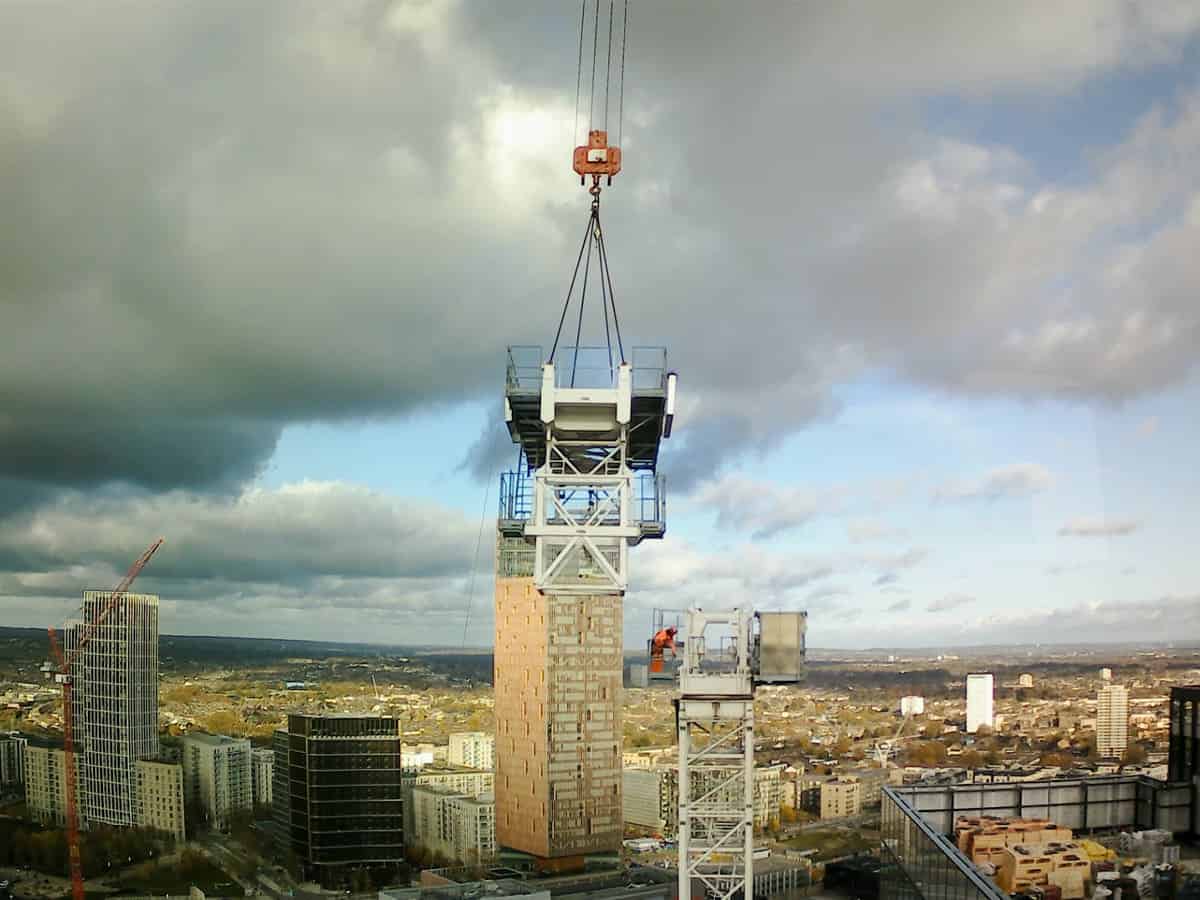
- Tower cranes get erected using other cranes. Usually by a mobile crane or another tower crane. The best time to do the work is at weekends, when sites are at the quietest, and when road closures, if needed, are more feasible. The tower cranes arrive on site in pieces on lorries. Once the crane base is established, the first piece, a tower section, gets bolted to the base to begin the mast construction. Inside these tower sections are ladders and platforms for access up the mast.
- Each mast section gets bolted on top of one another using high-strength bolts that get tightened using torque machines. The level of torque is outlined by the crane manufacturer.
- Tie bars sometimes get added to the sections at certain heights when the crane is going to be too high to be free standing. These tie bars link between the mast and the building.
- A security fan and trap door often added to prevent intruders from climbing the crane out of hours. The fan fits on the outside of the mast.
- If a tower crane is to be climbed to a greater height once the building gets higher, a climbing frame is sometimes attached at erection stage, ready for the climb. But this is sometimes left to nearer the time of the climb.
- Once the mast is at the required height, a slew ring gets attached on top. This is also called a turntable. It makes the crane rotate 360° during lifting operations.
- Then comes the crane cab. This is where the operator sits in comfort, often with slippers on, to work their magic.
- Once the cab is secured, the back-jib (counter-jib) gets installed at the rear of the crane. This sometimes gets fitted with the jib’s furniture (winches and electrical control panels) already attached, but they also often get fitted on the back jib once it’s attached to the crane.
- If a crane requires an A-frame, this is then added. Topless cranes, otherwise known as flat top cranes, don’t require A-frames.
- The main jib gets attached to the front of the crane. This is what holds the hook to do the lifting. Like the tower, the jib is made up of sections. If there is sufficient space on the ground, the whole jib gets put together prior to being lifted up to the crane as one unit for installation.
- Now that there is weight at the front of the crane, ballast weights (counterweights) get positioned at the rear, to counteract any weight being lifted at the front.
- The main structure of the crane is now complete. But in order for it to work, it needs a power supply. So, once the cables have been lifted up and tied onto the mast, electricians will do the connections between the crane and either a generator or the main grid.


Post crane-erection
As soon as a tower crane is built and rigged up to a power source, the erection team make sure all the operational functions, crane readings, and sensors work properly.
A crane is built up of lots of sensors which are part of a Rated Capacity Indicator (RCI). These sensors serve many purposes. A couple of examples are to ensure the crane doesn’t get overloaded, plus to have upper and lower limits on the hoist to make sure the hoisting slows down and stops when reaching the top and bottom.
The readings show up on monitors in the cab. These give details like hook radius and height, load weight, and wind speed, etc.
The erectors will calibrate the crane and ensure it can lift to its maximum capacity, by using the crane to lift a test weight, which is oftentimes greater than the crane’s standard working capacity.
Once all these checks are done. The crane undergoes a thorough inspection by an independent inspector. As per LOLER, before lifting equipment can be used for the first time, especially if it’s been assembled on site, a competent person must inspect it to ensure it is safe to use. They will write a report that outlines the inspection date, the next due inspection date, and any defects. This thorough inspection then gets carried out annually.
Between those inspections, tower cranes get serviced regularly, and the crane operators carry out daily and weekly checks.
Disassembly
Now that you know how tower cranes are assembling, why don’t you watch a series of videos showing a tower crane being disassembled?
Click on this link and enjoy.


Leave a Reply